
What is upskilling, and why does my organization need it?
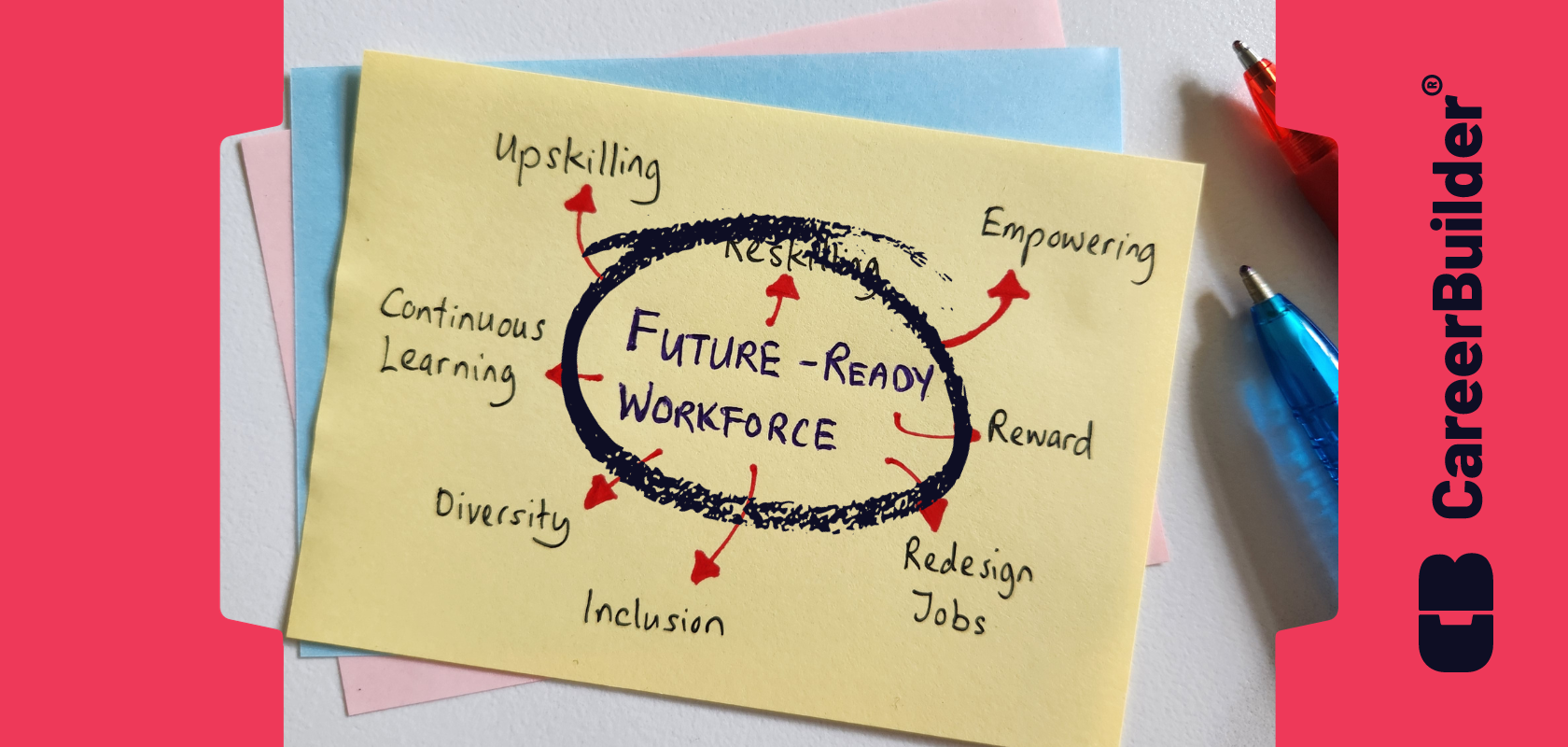
The word “upskilling” is fairly new, with Webster's noting that its first known use was in 1978. But there's nothing new about the idea of improving a skill set to remain professionally relevant; that concept has been around for many years. As a manager or leader, you may be aware that upskilling is important but unsure of how it really applies to your organization. Now's as good a time as any to find out.
What does upskilling mean?
Upskilling is the act and process of improving the skills of your employees. Normally, upskilling takes place deliberately through formal training programs organized by the employer. The idea is that business is an ever-evolving environment, so workers need to add competencies to their skill set not only to keep pace with demands but also to thrive.
Consider the proliferation of digital tools in the workplace over recent decades. In the 1980s and '90s, the word processor replaced the typewriter, and then the personal computer eventually supplanted the word processor. The passage of time brought additional changes in computing technology, including new operating systems, software applications, and the World Wide Web. Changes continued into the contemporary professional landscape with social media and increasing security measures for internet safety. Each era of evolution in office computing has required education and training to grow employees' technical capabilities. That's upskilling.
Of course, it's not just technical expertise that can be upskilled; the so-called soft skills can, too. Improving employees' emotional intelligence and related competencies is equally important to foster engagement and optimal productivity in the modern workplace.
Why upskill?
Upskilling provides a range of advantages to both you and your employees; some of the most important ones include:
- Better employee engagement: By providing your employees with opportunities to learn and grow, you show that you're invested in their future, which can inspire a sense of belonging in the organization. When an employee feels they belong, they're much more likely to feel connected with their work and their coworkers. In the long term, that also correlates with higher retention.
- Easier recruitment: Just as an upskilling program can promote engagement and loyalty in your existing workforce, it may likewise appeal to those who want to join your organization. The very fact that the program exists suggests to job seekers that your business not only cares about the professional well-being of its employees but also provides opportunities for career advancement. They realize that by joining your team, their career can move continually upward.
- Greater productivity: Every time a major advancement happens in your workplace, whether because of new technology or novel methodology, your organization must meet the new demands or find itself unable to keep pace with its competitors. To catch up, you should train your employees to fill the skills gap introduced by the advancement, and employees who are trained well are more capable of producing at a higher level.
Is upskilling the same as reskilling?
Upskilling and reskilling are similar concepts, but key differences separate them. With upskilling, the employee's skill set grows but still relates directly to their current role. Think of a house with recently completed additions; it's still the same property, occupied by the same people, but now it has more bedrooms, a covered back porch, an extra half-bath on the ground floor, and a much larger kitchen.
In contrast, reskilling refers to learning new skills so that employees can perform different functions. Often, those being reskilled are transitioning to new roles within an organization. To revisit the example of the house, imagine that the owner builds a separate house near the original one, with the intention of moving into the new structure. The properties are different, but the same person owns them.
So, if an employee is looking to grow professionally in their own field, that would be upskilling. But if they're pursuing a different line of work, even if it's within the same organization, that would be reskilling.
Why is upskilling important in today's workforce?
Upskilling is profoundly important in today's workforce because business is always evolving. In fact, it's probably evolving faster than ever thanks to ongoing rapid advances in technology. They are no longer strictly functional evolutions, like that from the typewriter to the word processor. Rather, technological progress is more in line with the leap from word processors to internet-connected personal computers — a revolution in how we approach work in the first place.
In the '90s, if you were slow to adopt personal computers and the web, your skill set was quickly outdated. Others were churning out documents and processing data much faster and more accurately, and their productivity skyrocketed. Advances in artificial intelligence are causing the same kind of revolution today. Organizations that can grow their employees' understanding of AI, machine learning, and natural language processing stand to adapt more easily to new business environments. And that applies to a broad range of activities, including operations and the hiring process.
Technology is likely to become more advanced as time progresses, and greater advancement tends to correlate with shorter half-lives for skills. In a Research Insights report, IBM points out that the half-life for professional skills is around only five years, a decline from 10 to 15 years in earlier times. The implication is that employees need to upskill at least a couple of times every decade if they and their employers are to remain impactful.
"Organizations that can grow their employees' understanding of AI, machine learning, and natural language processing stand to adapt more easily to new business environments."
How to develop an effective upskilling program for your workplace
Thinking about starting an upskilling program for your workplace? Every organization has its own needs and capabilities, but these measures can help you develop a program that fosters productivity, engagement, and success:
- Evaluate the current skills. That means assessing each employee's capabilities to determine your starting point. After all, you can't create a program for growth if you don't know what you're already working with.
- Identify the gaps. Assess the competitive landscape to determine which skills are trending or in high demand. These are expectations against which you'll measure your employee's current skill sets. The difference you find between the two factors is the gap you need to fill with your program.
- Set SMART goals. Now that you know the difference between the current circumstances and the ones you want to realize, set specific, measurable, achievable, relevant, and time-bound objectives for getting from point A to point B. That will involve setting deadlines and establishing tools to determine employees' proficiency with their upgraded skills.
- Select candidates. Not every skill will apply to every employee. For example, leadership upskilling would pertain to existing or future leaders. Selecting the right candidates helps to ensure that your program remains relevant to your employees, which is a key factor for promoting compliance and engagement.
Remember, upskilling your employees is an investment. The resources you put into the program affect the outcomes you get from it. Forethought, planning, and proper funding can help to ensure that you provide value to your workforce, who in turn may provide increased value to your organization in the long term.
More tips about employee skills:
- Unsure of how to gauge the skills of your existing workforce? Use pre-employment tests. They're not just for candidates.
- There are also metric-driven methods of assessing your employees, such as evaluating their work quality.
- And don't forget that investing in your employees' training can be a measure for boosting retention. Consider some other methods for keeping your employees engaged instead of burned out.


Recommended Content:
-

Female workers nearly 3x more likely to think there is pay disparity at work
Explore the causes behind the scenes of female pay disparities in the workplace before exploring how organizations can take a proactive approach to equal pay.
Read Article
-

Do’s and don’ts for making the workplace fun
Forcing fun in the workplace can backfire, so use the do’s and don’ts in this guide to help you make the right move when you’re trying to encourage fun at work.
Read Article
-

Supply chain trends that can impact hiring
Discover top supply chain trends that can impact hiring, including some roles emerging in relation to these trends, to help your company remain competitive.
Read Article