
What is AI-based recruitment, and how can you use it for your business?
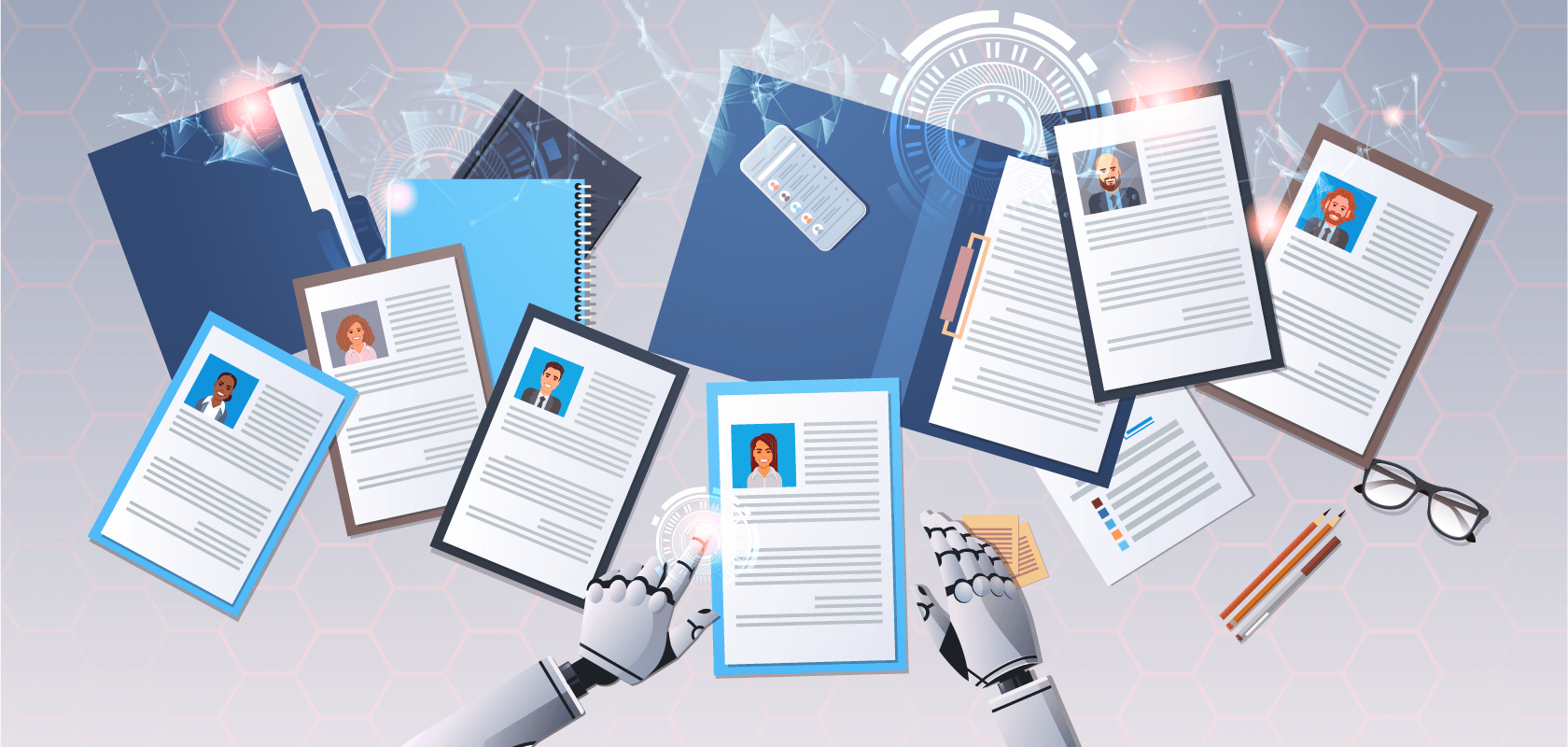
After many years of slow and steady progress, artificial intelligence has finally taken the world by storm. What was once a sci-fi movie plot is becoming reality, as AI-based software is taking over various aspects of our lives. From giving thorough answers to complex questions to generating an image from a simple text prompt, AI is already helping us, and we're barely scratching the surface of what it can eventually do.
While AI has the potential to improve virtually all fields and industries in the future, there are some domains where professionals already use it, such as recruiting. Using AI to filter candidates and provide valuable insight into which ones are more likely to succeed in various roles can potentially revolutionize recruiting practices.
What is AI-based recruitment?
AI-based recruitment involves integrating artificial intelligence into the process of attracting job seekers and hiring new employees. Complex AI systems can perform certain repetitive tasks that you previously had to do yourself, while also improving the entire process by analyzing large amounts of data and generating useful insights. Besides giving you more time to handle complex and important tasks, AI-based recruiting can improve decision-making and increase your chances of selecting the right people for specific roles.
What are some practical applications of AI-based recruitment?
Some specific ways you can use AI right now to improve your candidate selection and interviewing processes are:
Automating repetitive tasks
One of the most basic uses of AI technology is training it to execute certain basic repetitive tasks. This can be especially valuable in recruiting, as you may spend a lot of your working time performing these types of tasks. Some examples of these areas include:
- Finding quality candidates for each role: You can train AI systems to sift through large candidate databases and identify the ones who are most likely to fit a specific role. This usually involves teaching the AI about the skills, experience level, and educational requirements of ideal candidates in various roles.
- Ranking selected candidates based on job-specific criteria: After it has created a shortlist of potentially viable candidates, you can also teach an AI system to narrow down the search based on more in-depth criteria. You can also ask the AI to rank the selected candidates based on how close they are to the ideal candidate profile.
- Communicating with selected candidates: You can take it one step further and automate basic communication with job candidates. This can include sending them emails, conducting online aptitude tests, and even scheduling face-to-face interviews.
Getting valuable insights from data
Analyzing large amounts of data to gain insights and discover trends is as important as it is time-consuming. While doing so manually can be tedious and keep you from other more pressing tasks, training an AI system to do it can be both effective and efficient. For instance, AI can analyze existing personnel files and determine specific patterns that may match a job candidate with certain characteristics to a particular role.
Improving communication with candidates
Job candidates who sense a connection with a company are generally more likely to eventually become employees. AI can help keep candidates engaged throughout the recruiting process by emailing and even having full conversations with them to discuss the role and their application status. Even if a candidate isn't right for a position right now, reaching out to them and explaining why they're not currently a good fit may make them more likely to try again in the future.
Conducting introductory interviews
Like many other aspects of recruiting that can be enhanced by AI, introductory interviews may take up a significant part of your working time. You can use an AI-based system to schedule and conduct pre-screening interviews with candidates. These interviews can narrow down the search even further and help candidates learn more about the role and the hiring organization.
Reducing bias
Finally, you can use AI-based recruiting to reduce the conscious or unconscious bias that you may display during the candidate selection process. Even if you're committed to avoiding all biases, you may instinctively favor specific types of candidates based on characteristics that are irrelevant in a professional setting, such as gender, race, and religion. Using an AI to filter candidates can ensure a fair and inclusive selection process that benefits both the candidates, as they're judged solely on professional abilities, and your company, which gets top talent regardless of irrelevant characteristics.
"AI is already helping us, and we're barely scratching the surface of what it can eventually do."
Potential challenges of AI-based recruitment
Although using AI is likely to improve your candidate selection process, it only works as intended if you implement it correctly. These are some challenges that you may have to overcome before seeing the benefits of an AI-based recruitment process:
AI usually requires large datasets to generate useful insights
Despite significant advancements in AI, it still needs huge amounts of data to come up with a meaningful conclusion. This can be important to remember when implementing it at different stages of the recruitment process. For instance, it may need to analyze thousands of resumes before deciding which characteristics make a candidate likely to be a good fit for a specific position. Try to collect as much data as you can before using AI for these types of tasks.
Your employees may be reluctant to use it
If you manage a company and want to use AI-based recruitment, you may encounter resistance from an unlikely source: your HR team. As often happens with new technology, people may be skeptical regarding its potential benefits. When it comes to AI, recruiters may also be worried that it will eventually take over their jobs completely. You can overcome this challenge by discussing the issue with your recruiters, empathizing with their concerns, and explaining all the ways in which AI can make their jobs less repetitive.
You can also assure them that AI isn't likely to replace recruiters anytime soon. Recruiting is a profoundly human endeavor that requires a specific set of soft skills, such as negotiation, empathy, and active listening. While AI can replace and automate basic tasks, we're still far from having a system that can understand human emotion. Relieving your recruiters of repetitive tasks will increase their job satisfaction, as they can focus on the more complex aspects of their roles.
Biases can carry over from humans to AI systems
Although the lack of bias is a major perk of AI-based recruitment, you must still be careful to avoid unintentionally training the system to replicate certain biases. Since AI selection and recruitment processes reproduce the ones performed by humans, it's important to analyze these processes and make sure they avoid discrimination against characteristics that are irrelevant to the role.
This analysis must be done periodically, as AI can develop its own biases by mistakenly favoring irrelevant patterns. For instance, a disproportionate number of people from a specific geographical region may have been hired in the past few years, for no relevant reason. AI may determine that the people from that region are also more appropriate for future job openings and prioritize them in the candidate selection process.
The times are indeed changing, and it's becoming more and more obvious that we're in the middle of an AI revolution. Keeping up with trends is essential for any business, and finding innovative ways to source and select job candidates can help distinguish your company from its competitors.
Learn more about effective recruitment practices:
Discover effective ways to hire in a competitive market.
Learn how and why you may be better off prioritizing graduates in your hiring process.
Consider this small business owner's guide to expediting the hiring process.


Recommended Content:
-

Female workers nearly 3x more likely to think there is pay disparity at work
Explore the causes behind the scenes of female pay disparities in the workplace before exploring how organizations can take a proactive approach to equal pay.
Read Article
-

Do’s and don’ts for making the workplace fun
Forcing fun in the workplace can backfire, so use the do’s and don’ts in this guide to help you make the right move when you’re trying to encourage fun at work.
Read Article
-

Supply chain trends that can impact hiring
Discover top supply chain trends that can impact hiring, including some roles emerging in relation to these trends, to help your company remain competitive.
Read Article