
How to use AI for new employee onboarding
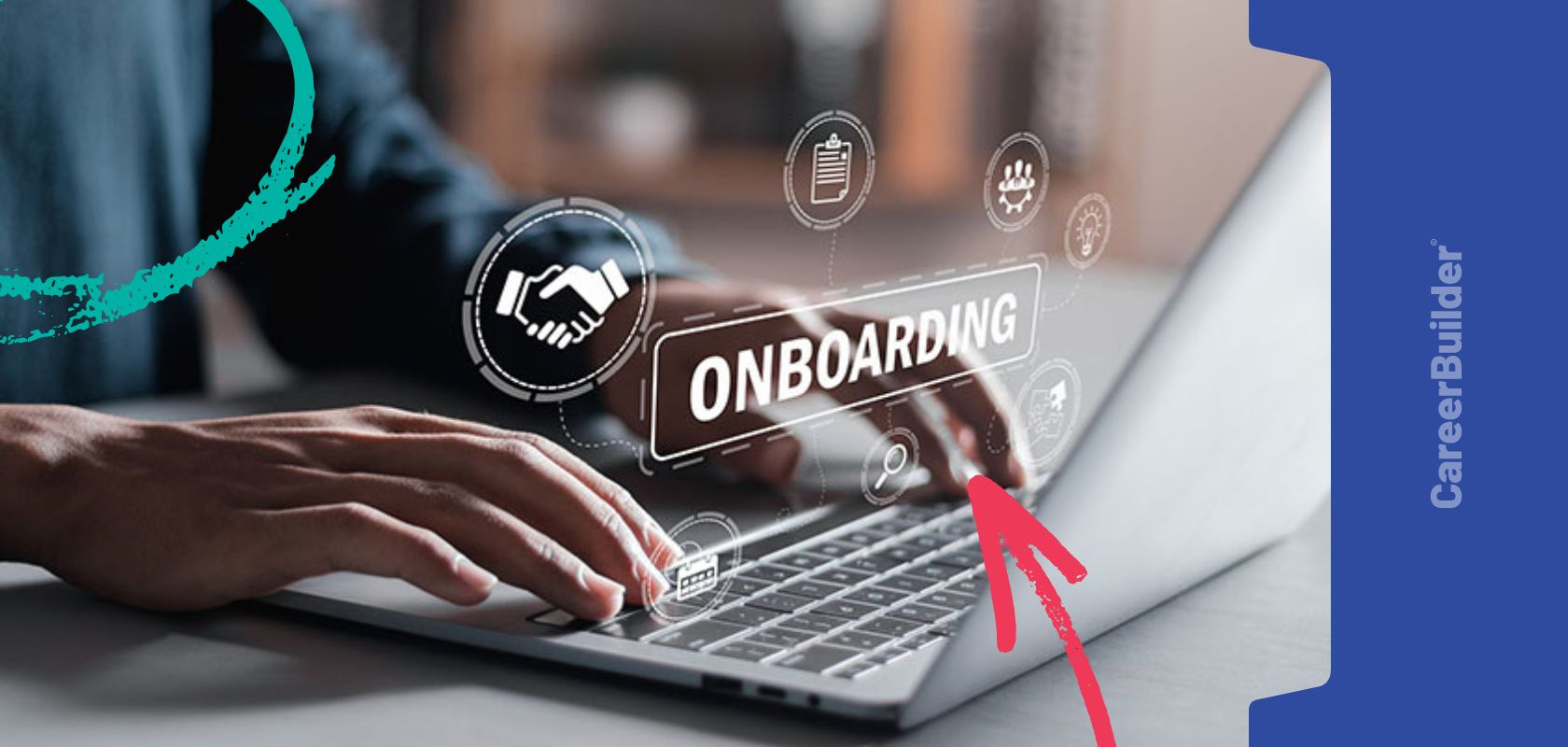
You want to inspire trust in your new employees by demonstrating that your onboarding is well-planned and executed. What you don't want is them struggling to find parking, feeling neglected, and being handed an agenda of topics that hold little bearing on the job they've just started. Unfortunately, time and monotony often prevent organizations from onboarding how they should and want. Onboarding can take months and involves heaps of repetitive tasks that HR may be tempted to place low on the priorities list.
That's likely a large part of why many employers have turned to artificial intelligence to handle their onboarding needs. CareerBuilder has surveyed 400 cross-industry hiring decision-makers to discover how this ascending technology is reshaping business, and we found that half of all respondents already use AI for new employee onboarding. We also understand that AI is still unfamiliar to many leaders, recruiters, and HR personnel, so they aren't sure how to integrate it, or whether they can.
How to use AI for employee onboarding
Hiring decision-makers may wonder how AI can serve their existing onboarding processes. The best answer is to point to its many existing applications. To that end, here are some of the technology's most common uses in onboarding:
Automating paperwork
AI is helping us supplant the days of manual document generation, delivery, and processing — an approach that easily leads to errors. Your AI-powered hiring tool can create, analyze, and validate your paperwork for you, all in a matter of minutes. It can even flag errors so you aren't on the line for costly compliance issues.
Providing immediate assistance
Onboarding is the first task your hire will perform in their new role. You can't reasonably expect them to know the ins and outs of your organization from day one, so they'll need support throughout the process.
To address this problem, AI-powered hiring tools often feature virtual assistants and chatbots that provide immediate assistance when needed. Your new hire needs only to query the AI system, which then seeks the database for the relevant information. Its response is instantaneous, so there's little need for HR to stand by and no reason for your new employee to feel helpless or bothersome.
Checking in
One of onboarding's principal goals is to help new employees feel they belong in the organization, but dropping a binder full of documents on their desk and expecting them to read it is no way to accomplish it. Rather, you need to check in with your hires at strategic points to gauge their progress, knowledge, and comfort.
Using AI to automate your check-ins helps you keep hires engaged without perpetual monitoring. The system can deliver surveys and questionnaires as soon as your hires reach certain stages in their onboarding. If they show signs of disengagement, that's a sign that an HR team member should step in.
Tailoring the experience to the individual
Having access to your employee database, your AI tool can assess each hire's traits and deliver an onboarding experience that aligns with their profile. It's a data-driven approach that can help you fill skills gaps and cater to individual needs with little to no manual effort. When onboarding is directly relevant to them, your hires stand a better chance of becoming and remaining engaged.
The advantages of AI employee onboarding
By using AI for new employee onboarding, your organization can:
Save time
The traditional approach to onboarding is an administrative juggle. Aside from introducing your hire around the office, completing their paperwork, and entering their data, you must undertake training, field their feedback, and maintain sufficient communication to retain their engagement. When AI handles these tasks for you, your HR staff can devote their efforts to building a relationship with the hire and acclimating them to important processes that defy automation.
Personalize the experience
Traditional onboarding is standardized, so every new hire undergoes the same experience. Such an approach elevates the risk of disengagement because it fails to account for different learning styles, needs for recognition, and career aspirations. AI technology can address this challenge by delivering personalized onboarding experiences based on employee data. This might entail:
- Training materials directly relevant to the hire's position
- Suggested resources that build off of the hire's current experience level
- Assigning onboarding mentors or partners who would best support the hire's needs and preferences
Efficiently coordinate timelines
In a manual onboarding process, a member of the HR team might deliver a task and expect the hire to complete it by a certain time. Hence, the process leaves open the possibility for one of either two outcomes when the team member checks back in:
- The task is finished: In this case, the hire might receive another task with another deadline. Repeated enough times, the tasks feel monotonous and endless — probably not the impression you want to make on a new hire.
- The task is unfinished: The hire needs more time to address the task, so the team member overseeing the tasks will return later. Each time this happens, the team member may need to interrupt other work to facilitate onboarding.
The AI-based alternative clears away all this need for coordination. The system delivers new onboarding tasks only after the hire has completed prerequisite tasks. Therefore, as long as they complete everything within the overall time frame, the hire can ease through onboarding at their preferred pace.
Retain your talent
In a survey of 1,500 professionals, software company Digitate found that delivering a negative onboarding experience can double the chances that your new hire will soon seek a new employment opportunity. The corollary is that a positive experience — centering on relevant, timely, and tailored experiences — can increase your odds of retaining the talent you've worked hard to obtain.
AI may not be the only way to create an engaging onboarding process, but it helps you do so quickly and efficiently. Otherwise, you would have to devote more of your limited HR resources to the time- and labor-intensive activities necessary for crafting a bespoke onboarding experience for every new hire.
"… [D]elivering a negative onboarding experience can double the chances that your new hire will soon seek a new employment opportunity. The corollary is that a positive experience … can increase your odds of retaining the talent you've worked hard to obtain."
Tips for successfully onboarding employees with AI
Follow these tips to get the most out of your AI employee onboarding process:
- Choose the right AI tool: Every good AI hiring tool is different. Getting the most value out of your tool depends greatly on how much time you spend researching your options. Refer to your organizational needs, hiring goals, and budget to identify the tool that will work best for you.
- Leverage predictive analytics: Predictive analytics uses data to determine the likelihood of future events. Use your AI tool's predictive analytics function to assess whether you should take interventions during onboarding to prevent losing your new hire in the future.
- Balance technology with the human element: AI should complement your HR team, not replace it. The best engagement occurs when your new hires know they have their colleagues' support, so retain the most valuable elements from traditional onboarding practices.
- Collect feedback: AI is built on machine learning principles, whereby the system applies feedback to correct and improve itself. Seek and gather feedback from your new hires so you can provide your AI tool with the data it needs to grow more robust.
Remember, a lot happens during onboarding that shapes how a new hire views the organization. Leveraging AI technology can keep you from overlooking key factors that may cause you to lose grip on your new employee's trust. Download CareerBuilder's white paper "AI in Technology: 2024 Trends, Insights & Predictions" to discover more about AI's applications in onboarding as well as other areas of recruitment and hiring.
The candidate experience begins way before onboarding, however. Introduce CareerBuilder's AI tools to your hiring process at the beginning to maximize your chances of successful candidate engagement. Our AI-powered search and match can support your active recruitment by linking you with candidates who best suit your needs, while AI-optimized job descriptions boost your odds of attracting high-quality applicants.
More tips about the candidate experience:
Improving your candidate experience requires optimizing your hiring process, from the application itself to candidate tracking.
Making the right cultural hire is an often overlooked variable in the candidate experience. A personality already attuned to your company culture is likelier to jibe with your onboarding process.

Recommended Content:
-

Female workers nearly 3x more likely to think there is pay disparity at work
Explore the causes behind the scenes of female pay disparities in the workplace before exploring how organizations can take a proactive approach to equal pay.
Read Article
-

Do’s and don’ts for making the workplace fun
Forcing fun in the workplace can backfire, so use the do’s and don’ts in this guide to help you make the right move when you’re trying to encourage fun at work.
Read Article
-
Supply chain trends that can impact hiring
Discover top supply chain trends that can impact hiring, including some roles emerging in relation to these trends, to help your company remain competitive.
Read Article