
Mastering common teacher interview questions
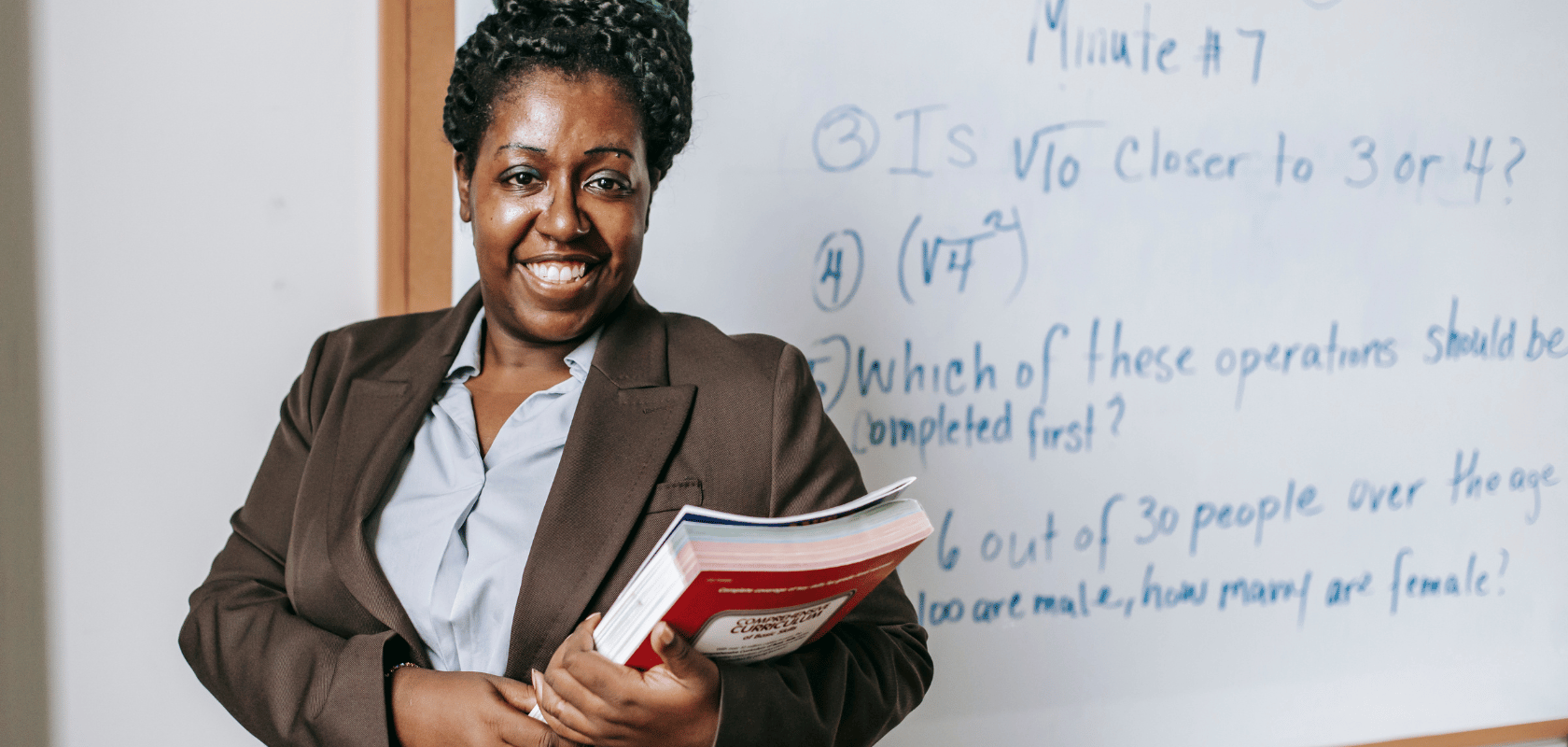
Are you applying for teaching jobs and feeling overwhelmed at the thought of an interview? Don't worry, you're not alone. The good news is that with some preparation, you can set yourself apart from the other candidates and highlight your passion for teaching. It's all about familiarizing yourself with the typical teacher interview questions and crafting impactful responses that demonstrate your knowledge, experience, and enthusiasm.
Let's go over some of the common questions you might be asked during a teacher interview and review sample answers to give you an idea of what to expect.
Why did you become a teacher?
Almost every interview will start with a question about why you became a teacher. The interviewer wants to gauge your passion for teaching and commitment to the profession. When answering this question, be honest and sincere. Share your personal story and how it led you to become a teacher. Talk about your passion for education and desire to impact your students' lives positively.
Sample answer: "My third-grade teacher, Mrs. Johnson, ignited my passion for teaching. She made me feel valued and supported, even when I struggled. Her dedication to helping her students succeed inspired me to become a teacher and provide the same level of support and encouragement to my own students. As a teacher, I strive to create a welcoming and inclusive environment where every student feels valued and capable of achieving their goals. Seeing my students grow and succeed motivates me to continue teaching."
How do you handle classroom management?
Classroom management is a critical skill for any teacher. The interviewer may ask this to learn how you maintain a positive and productive learning environment in your classroom. When answering this question, discuss your strategies for establishing clear expectations, enforcing rules and consequences, and building positive relationships with your students. Share examples of how you have handled challenging situations and what you learned from those experiences. If you are new to teaching, you can use an example from in-classroom training or volunteering.
Sample answer: "At the beginning of the school year, I take the time to discuss my classroom rules and expectations with my students and involve them in creating our classroom guidelines. I also prioritize building positive relationships with my students by getting to know them personally and showing them that I care about their well-being.
"When enforcing rules and consequences, I take a proactive approach by addressing issues before they escalate. I create a supportive and positive classroom environment that encourages students to make good choices. However, if a student does break a rule, I use a progressive discipline approach, starting with a verbal warning and escalating to more severe consequences if necessary."
How do you differentiate instruction to meet the needs of all students?
Effective teachers recognize that every student learns differently and has unique needs. This teacher interview question seeks to ensure that you differentiate your instruction to meet the diverse needs of your students. When answering this question, discuss your strategies for assessing student learning styles and adapting your teaching methods to meet those styles. Share an example of how you previously differentiated instruction and how it improved student outcomes.
Sample answer: "During a math unit on fractions, I noticed that some of my students struggled to understand the concept of equivalent fractions, while others had already mastered it and were ready for a more significant challenge.
"To address this, I held small groups for students who needed additional support and provided extension activities for students who were ready for a greater challenge, requiring them to apply equivalent fractions to real-world situations. I saw significant improvement in student outcomes, with all my students demonstrating mastery of equivalent fractions. This experience reinforced the importance of differentiating instruction to meet the diverse needs of all students and showed me that with the right strategies in place, every student can succeed."
"It's all about familiarizing yourself with the typical teacher interview questions and crafting impactful responses that demonstrate your knowledge, experience, and enthusiasm."
How do you use technology in your teaching?
Technology is an integral part of modern education, and the interviewer wants to learn how you incorporate it into your teaching. When answering this teaching interview question, discuss the technology tools and resources you use in your classroom, such as interactive whiteboards, tablets, or educational apps. Share examples of how you have used technology to enhance student engagement, promote collaboration, or facilitate learning.
Sample answer: "One of the primary ways I use technology in my teaching is through interactive whiteboards. Interactive whiteboards are a great way to engage students and make lessons more dynamic. For example, during a social studies lesson, I might use the interactive whiteboard to display maps or primary source documents that students can zoom in on and explore.
"I also use tablets in the classroom to give students access to digital textbooks and educational apps. Another way I use technology is to facilitate collaboration among students. For example, I use online tools such as Google Docs or Padlet to enable students to collaborate on a project or share their ideas with the class."
Describe your method of communicating with parents and guardians
Communication with parents and guardians is essential for building a strong partnership between home and school. The interviewer wants to know how you communicate with parents and guardians and keep them informed about the progress of their children. When answering this question, talk about your strategies for regular communication, such as holding parent-teacher conferences, sending emails, or crafting newsletters. Share examples of how you have worked collaboratively with parents and guardians to support your student's academic and social-emotional growth.
Sample answer: "I communicate with parents and guardians through conferences, emails, and newsletters. I respond promptly to messages and concerns and work collaboratively with parents and guardians to support each child's learning. One specific example of how I have worked collaboratively with families was during a recent math unit on addition and subtraction. During this unit, I noticed that one of my students was struggling to understand most of the concepts. I reached out to her parents and scheduled a parent-teacher conference. During the meeting, I shared examples of the student's work and discussed specific areas where she struggled.
"Together, we created an action plan to support the student. Her parents committed to working with her at home by practicing math skills, and I provided extra support in the classroom. We also set up a weekly check-in to monitor her progress. Through this collaborative effort, the student made significant progress in her math skills. Her confidence grew, and she was eager to participate in class."
How do you stay current with educational trends and best practices?
The interviewer may ask about this to learn how you stay up to date with the latest research and best practices in education, which is essential for teachers. When answering this teacher interview question, talk about your commitment to ongoing professional development, such as attending conferences, workshops, webinars, or reading professional literature. If possible, share examples of how you have implemented new strategies or techniques in your teaching practice and how they have benefited your students.
Sample answer: "I am a regular reader of the National Education Association (NEA) blog and Education Week for their insights on current issues and best practices in teaching. I also participate in professional development opportunities, attend conferences and workshops, and engage in discussions with colleagues to stay up to date and continuously improve my teaching methods."
Remember, an interview is simply a conversation, and with adequate preparation, there's no need to feel anxious. Write out your responses to each of these questions and practice them. Be honest, sincere, and enthusiastic in your answers, and you will be sure to impress. Additionally, don't rely on just one interview. Line up multiple interviews by creating an online profile to increase your visibility to potential employers.
Related reading for prospective teachers:
Learn about four modern tech skills that every teacher should have.
Make your teacher application stand out with a well-written cover letter.
Not hearing back from employers? Improve your resume with these tips.


Recommended Content:
-
GPA on your resume: Should you include it, and how?
Learn when to include your GPA on your resume and see best practices for presenting it to increase your chances of securing your dream role.
Read Article
-

How to find a mentorship
Learn how to find a mentorship that can guide your career, why business mentors are essential to career success, and what to look for in your mentor.
Read Article
-

Is marketing a good career for you?
Learn whether a marketing career is a good choice for you with this guide that explains types of marketing careers and the skills you need for this role.
Read Article