
How to reward work-at-home employees
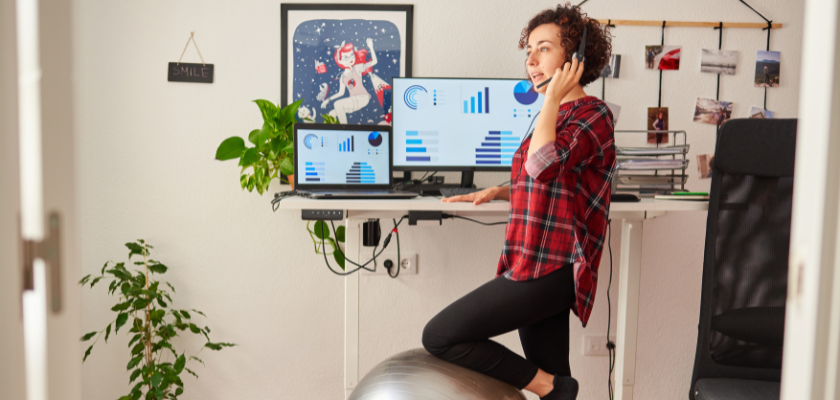
The trend of working from home has grown in popularity, especially during the past two years due to the coronavirus pandemic. While the role of employers doesn't end with employees working from home, it provides for different challenges. At times, working at home becomes difficult for employees to stay engaged, so you need to find a way to keep these at-home employees motivated and satisfied, so they stick around but continue to be productive.
Including fitness benefits
Studies have shown that remote workers tend to be more sedentary due to no commute. Those working from home averaged 9.2 hours spent sitting, compared to 7.3 hours for those in an office. Fitness combats stress, gives employees a routine, and helps them feel better physically and emotionally. Consider offering to pay for a gym subscription or fitness program, with some of these programs even offered online. You might also offer a health budget that employees can put toward purchasing new running gear, enrolling in yoga classes, signing up for meditation courses, or setting up a home gym.
The fitness benefit might be part of your wellness incentive program. These programs typically encourage healthy behaviors among employees, such as quitting smoking or walking a certain number of steps each day. If you offer such a program, your employees might receive a certain number of points depending on their activities or meeting certain goals. They might then be able to cash out your points for certain items, such as paid time off, gift cards and merchandise, or health insurance rebates.
Hosting virtual team-building experiences
Before the shift of employees working from home, they likely had a chance to participate in the time-honored tradition of the after-work happy hour. Once people began working from home, they lost the in-person socialization aspect. However, some employers who have at-home employees have gotten creative in adapting to this new working situation by offering virtual happy hours. Sometimes, employers send alcohol directly to the employees' homes, and the employees log onto video conferencing sites to socialize.
Another option is to plan virtual game nights. The isolation of being at home often leads to loneliness and disconnection, so by setting up these virtual game nights, your employees can connect with others and share some laughs. They might also learn how to collaborate, and this carries over to their work. Virtual games are available, so you don't even need to send anything like you would for virtual happy hours.
Enhancing at-home setups
To help remote workers get their job done more effectively and efficiently, some employers offer ergonomic desk setups. The tools that they need can make a huge difference in their job satisfaction. Some of the technology perks that you might decide to provide typically include:
- Laptop or several monitors and keyboard
- Quality headphones or earbuds
- Adjustable standing desk or treadmill desk if people prefer to work standing up or want to work out a bit
- An ergonomic and comfortable chair
- Hardware accessories, such as webcam and wireless device charging station
- Ring light to better show people's faces on video calls
- Apps to connect people to the network
- Software upgrades
You could also offer reimbursement of the internet or phone usage, the latter of which is especially important if your employees speak with a lot of clients. Also, depending on your type of business, your employees might receive a company cell phone to help them stay connected.
Another possible at-home reward involves caring for the home because having a clean and comfortable home environment makes for happy employees. Providing services can help things run smoothly at home, whether this involves gardening, cleaning, or even cooking. You could also offer food delivery service subscriptions or discounts with local food delivery services.
Offering learning opportunities
Another way you can reward employees is to provide them with training classes they can access either for free or at a significant discount. Offering these opportunities encourages them to develop and expand their skills so they can be an asset to your company. They can also take courses such as cooking or meditation to enhance their mental well-being. Once they've finished the courses, they might garner certifications to take on more tasks at their job or train others in certain areas.
Featuring flexible work schedules
Depending on your industry, your employees might be able to work a varied work schedule. For instance, if certain employees do their better work later in the day, they might speak with you and come up with a flexible schedule that maximizes their productivity. You might agree to this setup on a week-by-week basis as long as you convey that flexibility is the key to productivity. With flexible at-home schedules, employees won't worry about commuting so early or late in the day, and this option might benefit their families, as well as their job.
Celebrating employees' success
Just because employees aren't in a physical office doesn't mean that you cannot recognize their achievements. If they go above and beyond what's expected, it's nice to send them some sort of acknowledgment. Consider sending out a company-wide email highlighting recent achievements, but keep in mind that the effects of the email might be short-lived.
A celebration is a wonderful way to honor their efforts and hard work, and it's a great opportunity for other team members to recognize their achievements. You can thank the employee and the rest of the team for contributing to the company. The celebration doesn't have to be a big deal either, but many employees value this type of public recognition.
Providing child care benefits
If employees have young children and work from home, they might have difficulty staying focused on their job. Those little ones need their attention and distract them from getting work done. To help families care for young children, offer employees access to professional babysitters or engaging online classes for children to explore.
Giving additional time off
Who doesn't love having additional paid time off, especially after a long week? Consider implementing summer hours, which include half-days on Fridays. Having this extra time off gives employees an opportunity to recharge their batteries and an incentive to finish out the week strong. You can also reward employees for hard work once they complete a massive project by giving them an extra paid day off.
Prioritizing mental well-being
Even before the COVID-19 pandemic hit, the country's mental health began to decline. Addressing mental well-being has jumped to the forefront, particularly during the pandemic. Some of the most common workplace mental health issues include:
- Anxiety. Closely related to stress, workplace anxiety causes sleep loss, lack of motivation, and memory issues. The Anxiety and Depression Association of America states that 28% of American employees have experienced an anxiety or panic attack.
- Stress. The American Institute of Stress reports that 57% of U.S. and Canadian workers suffer from daily stress, with some of the leading factors including financial insecurity, sickness, concerns over COVID-19, and racial trauma.
- Depression. Employees who experience difficulty concentrating, fatigue, feeling sad, or thoughts of self-harm might be suffering from depression.
- Burnout. Some employers expect work-at-home employees to work longer hours because they're more accessible. These employees might have difficulty balancing work/life balance. Heavy workload and excessive hours are some of the causes of employee burnout.
In today's working environment, you should work with employees to maintain a cohesive company culture that supports at-home talent. When you invest in employees, the business is more likely to thrive. One way that you can reward remote employees with a variety of incentives is to improve their overall at-home work experience, as well as their mental and physical health.
Related reading: improving the workplace environment
Consider implementing some of these top 15 employee perks.
Learn what employees miss from working in an office.
Find out suggestions from a panel on how to help build a more equitable and diverse workplace environment.


Recommended Content:
-

Female workers nearly 3x more likely to think there is pay disparity at work
Explore the causes behind the scenes of female pay disparities in the workplace before exploring how organizations can take a proactive approach to equal pay.
Read Article
-

Do’s and don’ts for making the workplace fun
Forcing fun in the workplace can backfire, so use the do’s and don’ts in this guide to help you make the right move when you’re trying to encourage fun at work.
Read Article
-

Supply chain trends that can impact hiring
Discover top supply chain trends that can impact hiring, including some roles emerging in relation to these trends, to help your company remain competitive.
Read Article